Showing posts with label green tips. Show all posts

Thursday, June 27, 2013

Tips to Help You Raise a #HealthyBaby Plus a Seventh Generation #Giveaway

A question that green advocates like myself often get asked is why. Why do we need to stop using chemicals? Why should I buy organic foods? My short answer? You probably won't like it, but it is the truth: all of these chemicals are killing us. Before we go any further, I want you to take three and a half minutes to watch this "A Wake-Up Story" video.


Chemicals are everywhere. From the food our kids eat, to the grass they roll around on and the soap we use to clean them up. There are more than 80,000 chemicals registered for use in the United States however pre-market safety testing is not required. That's right, companies do not need to prove that a chemical is safe before it is introduced into the market. In Europe, more than 1,300 chemicals have been banned from use in personal care products yet here in the U.S. only 11 have been banned. We are failing to protect our children and now the leading cause of child-related death in the U.S. is cancer.

Let me repeat that:
the leading cause of child-related death in the U.S. is cancer! 

Our babies are dying before they even have a chance to live. They are born with more than 200 chemicals already in their little, vulnerable bodies. So THAT is why we all need to be more aware of what we bring into our homes and put on our bodies. That is why I personally urge everyone to be green.

Now that we have the why, let's get to the how. How can you reduce your child's exposure to toxic chemicals? If this is all new to you, the best thing to do is start off easy and take it one step at a time. Healthy Child Healthy World offers us five affordable tips to lowering chemical exposure:

  • Take off your shoes. 85 percent of the dirt in our homes is tracked inside on the bottom of our shoes. And unfortunately, it’s not just dirt, but also toxins like lead, pesticides, gasoline residue and more. So take your shoes off at the door and don't be afraid to request guests to as well.
     
  • Buy safer body care. Children are exposed to an average of 27 care product ingredients on a daily basis that have not been found safe for developing bodies. Protect your family’s health by avoiding products with ingredients like parabens, synthetic fragrances and triclosan. I personally use the Seventh Generation baby products and have been very pleased with them all. For a list of most-toxic offenders, download the Healthy Child Healthy World free eBook, “Easy Steps to a Healthy & Safe Nursery.
     
  • Open a window. We spend about 90 percent of our time inside, but indoor air is typically far more polluted than outside. So, open up your windows. Just a few minutes a day can improve indoor air quality. And don't forgot to do this in your car as well. When you first get in the hot car, roll down the windows for a few minutes while you wait for the A/C to kick in.
     
  • Eat whole foods. Processed foods are convenient, but they are also loaded with sweeteners, artificial flavors and colorings, and synthetic preservatives. These lack nutrients and many are also linked to health issues like ADHD and even cancer. Stonyfield Organic offers an arrangement of foods for babies, kids and adults; organic yogurts, smoothies, soy yogurts, ice cream and milk. I can tell you that they are delicious, are the only yogurt products I have ever used in the 8.5 years that I have been a mom and most importantly they are all made without synthetic hormones, toxic persistent pesticides, GMOs and artificial ingredients.
     
  • Ban the can. Bisphenol-A (BPA), a hormone disruptor that has been linked to everything from obesity to cancer, is in the plastic resin that lines most canned goods—from soups to sodas. Not to mention canned foods are usually loaded with salt. Look for foods packaged in glass or eat fresh, dried, and frozen options.

Now that you have learned a little more about toxic chemicals and how you can limit your exposure, there is still more you can do: take action and educate others. First, contact your senators and urge them to strengthen and pass the Chemical Safety and Improvement Act (CSIA). Click here to send a message to yuor senator now. Next, you can tell your friends, family, PTO, etc. about the dangers of chemicals and the safer products available to them by hosting a Healthy Baby Home Party. There is also a $1 off coupon available to download whether you sign up to host a party or not.

Giveaway
One (1) winner will received a Seventh Generation #HealthyBaby product gift basket. This giveaway is open to US residents only and will end on July 11, 2013 at 12:00 AM EST. Please use the Rafflecopter form below. Good luck!


a Rafflecopter giveaway

Thursday, April 18, 2013

Easy Tips To Help You Be Green Year Round

Being green does not have to be an all or nothing lifestyle choice. Even if you can't live off the grid growing all your own organic food, there are lots of little day to day things that you can do that will make a difference. And yes, even the smallest things make an impact, especially if we all start doing them. So here are a few of my tips on how you can easily be a little more green all year round.


Recycle. Most municipalities and private garbage companies include recycling with their garbage removal. If yours doesn't, call around to find one that does. Recycling your plastics, metals and paper takes little to no effrot but has a great impact on the environment.

Turn off the lights. During the day, open up all of your blinds to use natural light instead of electricity. When you leave a room, make sure you turn the lights off. Make sure you teach your kids this since they can be the biggest culprits of leaving lights on all over the house.

Switch to CFL or LED lights. CFL light bulbs use up to 75% less energy than incandescent bulbs and can last up to six times longer. LED light bulbs use up to 80% less energy than incandescents and can last up to 25 times longer. While these bulbs are more expensive to purchase up front, they will save energy and money over the long haul. CFL vs. LED

Unplug appliance and electronics. Even when not powered on, plugged in appliances like toasters and coffee pots use electricity. So when you are not using them, unplug them. For electronics like your TVs, DVD players, game consoles, etc., plug them all into a surge protector strip and at the end of the day, you just have to flip one switch to cut off power to them all.

Compost. Instead of placing green waste like vegetable and fruit scraps in a plastic trash bag where they will sit in a land fill for ages, compost them. Compost bins can be very expensive, but you can make your own compost bin fairly easy and cheap. After a little bit of time and work, you will be left with wonderful fertilizer for your garden. Personally, I'm lazy, so in the warmer months I collect my green kitchen scraps in a large fruit bowl and at the end of the day, dump into into our woods.

Eat organic. Eating organic food is better for your body and for the environment. Even though organic prices have come down slightly over the years, they are still more expensive. So do what you can. I feel that the items you consume the most of, like maybe milk, peanut butter, bread, etc., are the things that you should change first. Check out the Environment Working Group's Dirty Dozen and Clean Fifteen lists to see which produce items have the most and least amount of pesticides. This will help you choose which produce you want to make sure are organic.

Buy local. During the winter months, there are really no farmer's markets available here in our corner of Connecticut. But in the Spring/Summer/Fall we are part of a local organic CSA plus there is a great farmer's market down on our town green. Buying local produce helps your local economy and community and gives you a chance to talk with the farmer's personally to find out about their farming practices. To find CSAs and farmer's markets in your area, visit LocalHarvest.org.

Do you have any easy green tips? Share them with us in the comments!

Wednesday, February 27, 2013

Recycle Your Old Electronics at Best Buy

In a world where technology is constantly changing and improving, we leave behind a trail of unwanted electronics in our efforts to upgrade to the latest and greatest. Technology is the fastest growing waste stream on the planet. Well there is a better option other than tossing the old items in the trash. Sure, if the said electronic is in working condition, you can sell it or donate or give it to a friend, but what if it doesn't work perfectly? Or what if it is a decade old? That is where the Best Buy Recycling Program helps us out.


Best Buy's industry-leading recycling program is available for FREE at all of its locations throughout the United States and Puerto Rico. They will recycle most electronics including TVs, DVD players, cell phones and more. It does not matter how old your electronic item is, where you bought it or what shape it is in - Best Buy will gladly take it off your hands and safely dispose of it. For each minute that the Best Buy stores are open, they recycle 387 pounds of electronics. That is a lot of metal, plastic, wires and other components that they are keeping out of landfills.

Visit the Best Buy Recycling Program website to find out exactly can be recycled at your store and watch this brief video to find out what happens once your electronics get to the recycler.


When you are finally ready to upgrade from your old electronics and are dropping them off to be recycled at Best Buy, remember that they carry a large line of Energy Star certified products. Not only are Energy Star items better for the environment, they will shave a few bucks off your electric bill as well.

The reviewer has been compensated in the form of a Best Buy Gift Card and/or received the product/service at a reduced price or for free. All thoughts and opinions are my own.

Monday, November 12, 2012

Arm & Hammer Baking Soda Home & Beauty Tips

During the holiday season, you probably use Arm & Hammer Baking Soda for making cookies and other holiday baking. But did you know that baking soda has so many uses beyond cooking? When I started down my green living path five yeas ago, one of the first things I learned is that baking soda can make a great natural cleaner. Not only can you use it to clean up around the house, you can also use Arm & Hammer Baking Soda to tend to some of your personal care needs. With the holiday season upon us, baking soda provides an inexpensive and natural way to spruce up our homes and pamper ourselves while prepping for holiday guests. Check out these six tips.


Prep Your Home

These household uses for baking soda will help you get your home ready for guests.

Freshest Flavor - Be sure to keep an open box of Arm & Hammer Baking Soda in your refrigerator to ensure the freshest tasting ingredients for holiday entertaining.  This is especially important when storing garlic, onions or fresh holiday herbs and spices, which will transfer flavors to more delicate vegetables, meats and cheeses in the fridge.  Be sure to change the box once a month for optimal freshness.

Food Safe Surface Cleaning - Clean your food prep area and tools with natural, food safe Arm & Hammer Baking Soda instead of harsh cleaners. Sprinkle Arm & Hammer Baking Soda onto a clean damp sponge or cloth and wipe clean, rinse thoroughly and then dry.  Great for counters, stainless steel sinks, cutting boards, microwaves, wooden spoons, oven tops, range hoods and more.

Freshen Upholstery - Before guests arrive, remove lingering odors for fresh-smelling upholstered sofas and chairs with Arm & Hammer Baking Soda. Sprinkle baking soda on upholstery, wait 15 minutes and vacuum up.


Pamper Yourself

Whether you are exhausted from holiday shopping and need something to relax you or you want to make sure you shine for family photos, these tips will help do the trick.

Exfoliating Pedicure - Blend 2 tablespoons of Arm & Hammer Baking Soda in a basin of warm water. After a nice soak, make a scrub using 3 parts Arm & Hammer Baking Soda and 1 part water. Follow with an application of a rich moisturizer and a warm towel foot wrap. Let sit for 5-10 minutes. Feet will feel smooth and clean.


Facial Scrub and Body Exfoliant - For smooth, radiant skin, give yourself a gentle facial and body scrub with Arm & Hammer Baking Soda.  Make a paste of 3 parts Arm & Hammer Baking Soda to 1 part water.  Consider enhancing the treatment by including 1 part ground oatmeal. Rub in a gentle circular motion to exfoliate skin and remove dead skin cells. (Be careful to avoid eye area.)  Rinse clean with warm water.  Leaves skin feeling nourished and refreshed. Gentle enough for daily use!

Hair Care Help - Get rid of product buildup by sprinkling a small amount (quarter-size) of Arm & Hammer Baking Soda into your palm along with your favorite shampoo.  Shampoo as usual and rinse thoroughly.  The Arm & Hammer Baking Soda helps remove the residue that styling products leave behind so your hair is cleaner and more manageable.

So what is my favorite way to use Arm & Hammer Baking Soda? I would have to say I love using it to scrub the bathtub and shower. Soap scum is not fun to clean up, but the abrasiveness of baking soda really does it well. It is definitely one of my favorite ingredients for not only baking but cleaning as well. I always have at least 4 boxes of Arm &b Hammer Baking Soda in my house at any given time. One in each refrigerator, one in the pantry and one under the kitchen sink.

What other ways do you use baking soda around your home?


I wrote this review while participating in an Blog Tour campaign by Mom Central Consulting on behalf of Arm & Hammer and received product samples to facilitate my post and a promotional item to thank me for participating.

Monday, November 5, 2012

Becoming an Eco-Driver: Green Car Maintenance Even Your Local Mechanic May Not Know

Becoming an eco-conscious driver doesn’t only mean you have to trade-in your old four-door sedan for an electric or hybrid model. Sometimes the greenest thing you can do is make your current car last for as long as you can. One way to help the car you already have earn its status as the environmentally-friendly vehicle that you’ve always wanted it to be is to find green alternatives to some of the most common car maintenance procedures. Here are just five green car maintenance alternatives that even your local mechanic may not know about.


  1. Oil changes – According to Eric Wilson of 2ndGreenRevolution.com, “Choose a re‐refined oil or one made from bio-based animal by-products. Both are API approved and last up to 24,000 miles when matched with our dual stage oil filter.” Using these types of recycled motor oils can increase fuel economy up to five percent and can last twice as long as normal filters and decrease oil use by 70 percent, according to their site.

  2. Leaking tires – He also writes, instead of filling under-inflated tires with air, to find a place that will fill them with nitrogen. This change will cause leakage to happen slower because nitrogen molecules are larger, making them harder to leak. And since properly inflated tires improve fuel efficiency, nitrogen-filled tires may improve your car’s average gas mileage over time. Look around for service garages that offer nitrogen filled tires, but don’t overpay. Ten dollars per tire will more than cancel out any possible savings on fuel.

  3. Low or no VOC paint – Paints with low volatile organic compound levels will always be safer for you and the environment than their highly toxic counterparts. So, if you’re thinking about touching up some rust spots or giving your car a new coat or color, consider using low or no VOC paint to do the job.

  4. Windshield wipers – Did you know you can actually buy recyclable windshield wipers? Many windshield wipers are partially recyclable, but now manufacturers are making fully recyclable blades so nothing gets left in a landfill.

  5. Windshield wiper fluid – Most windshield wiper fluid is made from methanol, also known as methyl alcohol and wood alcohol according to Ecoki.com. If ingested, this highly toxic chemical can be dangerous and even deadly. But companies are beginning to produce fluid without methanol as its base. These plant-derived products may have a higher freezing point but are just as effective.

When it comes to eco-friendly car maintenance, the products aren’t the only things going green. Jennifer Alsever, an MSNBC.com contributor, explains how shop owners around the country are aiming for a new level of environmentalism not only to benefit their customers, but also their bottom line. She reports that, “Shop owners say that by going green they can cut operating costs, reduce waste disposal costs, cut long-term liability and improve employee health.” It’s a win-win situation and the options really are endless when it comes to green car maintenance alternatives in today’s car market.

So, become an eco-conscious driver and take care of the planet as you take care of your car. Whether you’re looking for a new auto loan to buy a brand new fuel-efficient car or a used car loan for an eco-friendly car that’s a few years old, there are a number of financing options for you. Or, if you’ve decided to stick with the car you’ve already got, consider an auto refinance to help you save money on your existing loan. It could save you more money to use on your next green car maintenance trip.


Thursday, September 22, 2011

5 Ways to Green Your Child’s School Experience

Kids need time to move outside—it’s essential to their health and well-being. But sadly, lots of students aren’t getting enough space and time during the school day to breathe fresh air, interact with nature, and engage in unstructured play. And considering that children spend about 20 percent of their waking hours in school, that’s cause for concern.

Luckily, parents have a voice when it comes to school policies and programming—it’s time to use yours! Here are five actions you can take this fall to bring more greenery and outdoor activity to your child’s school:

Take learning outside
Why restrict use of outdoor spaces to recess time? The outdoors is rife with learning opportunities, and with a healthy dose of creativity, teachers can find ways to take advantage of outdoor spaces and to incorporate natural, sensory, and “messy” elements into their lesson plans. Parents can help facilitate outdoor learning by pitching in to build a DIY classroom so that kids have a dedicated space outside to gather and reflect.

Organize a “walking school bus”
Parents often cite safety issues as one of the primary reasons they are reluctant to allow their children to walk to school. Yet there is always safety in numbers. A walking school bus is a group of children walking to school with one or more adults. It can be as informal as two families taking turns walking their children to school, or as structured as a route with meeting points, a timetable and a regularly rotated schedule of trained volunteers.

Reward walking and biking
Boltage, a parent- and volunteer-driven initiative, aims to increase the number of elementary school children regularly bicycling and walking to school. A solar-powered device counts daily trips. Children and parents can view and manage their data online, and students receive awards based on activity level. Boltage currently operates at 35 schools and has tracked over 650,000 kid-powered miles,which have saved 58,000 gallons of gas.

Create a “wild zone”
Playing in nature comes intuitively to children—after all, nature is rife with opportunities to splash, dig, climb, run, and explore. But “nature” doesn’t have to take the form of pristine forests and rolling hills. Even the smallest of school yards can incorporate cost-effective natural elements—whether in the form of sand, water, logs, or plants—by establishing a “wild” or “create-with-nature” zone.

Just add shade
Many schoolyards offer no shaded areas, which discourages use in hotter months. Shade structures come in all shapes and sizes and can be added to existing equipment to provide some respite from the sun. If your budget is tight, consider erecting temporary shade structures from tarps, fabrics, and/or tents. And don’t forget about planting trees, which not only provide shade but also beauty, greenery, and potentially, new climbing opportunities for children!

Ready to get started? Sign this Back-to-School Pledge and get a free copy of How to Save Play at Your School, featuring these and 10 additional actions you can take this fall.


Kerala Taylor is Senior Manager of Online Content & Outreach at KaBOOM!, a national nonprofit dedicated to saving play for America’s children. She is passionate about getting kids unplugged and about building community through outdoor play. You can follow KaBOOM! on Twitter: @kaboom

Thursday, August 18, 2011

How to Get Started with Composting

Composting is nature's way of breaking down and returning to the earth organic materials. By composting, you're helping to prevent pollution by avoiding contributing even more trash from rotting in landfills and instead, recycling naturally. Things otherwise known as trash decompose and return to an organic compound that can be used to enrich and fertilize your lawn and garden. Not only are you helping the environment by composting, you'll in turn have a more productive garden and reap the cost saving benefits from reducing the need to purchase harmful chemicals, potting soils, and additional water.


To properly compost, four ingredients need to be present - carbon, nitrogen, water, and oxygen. When composting there should be an approximate 2 to 1 ratio between carbon and nitrogen. The easiest way for me to keep carbons and nitrogens straight are to think of them in terms of colors - browns and greens. Carbon sources are usually brown and dry, while nitrogen tend towards things that grow and have a wet texture.


Now you're ready to start composting. But what can you compost? There are so many things that can be composted, it really does boggle the mind. Some items that can be composted are the following:

~ coffee grounds
~ vegetable and fruit scraps (including peelings, cores, and seeds)
~ tea leaves/bags
~ stale bread
~ eggshells
~ hay and straw
~ hair and fur
~ grass clippings
~ leaves
~ shredded paper with minimal ink
~ wood chips
~ yard trimmings (no diseased plants)
~ cardboard rolls
~ dryer and vacuum lint
~ shredded newspaper
~ cotton/wool rags
    Things that you should avoid adding to your compost pile are the following:

    ~ dairy products
    ~ meat, fish and poultry (including bones)
    ~ fats, greases, and oils
    ~ food sauces
    ~ sugary foods
    ~ ashes and charcoal
    ~ invasive weeds
    ~ any trimmings treated with chemical pesticides
    ~ treated wood
    ~  pet feces (manure is okay)
    ~ non-organics (plastic, metal, glass - recycle these)

      What are your thoughts on composting?  Are you inspired to start?


      Kelly is a Type A mom living in Austin.  She's a stay-at-home mom and blogs at Texas Type A Mom about family, food, reviews, and living a green life in Texas.

      Thursday, August 4, 2011

      What's In Your Breadcrumbs?

      I know what you are thinking. That I have gone off the deep end. Why the heck am I talking about breadcrumbs? Who cares, right? Let me explain. My husband and I battle over food a lot. I really try to keep our processed food consumption to a minimum and the processed food that we do eat I try to keep it as natural or organic as possible. He might think I am slightly crazy for it, but his health will thank me for it one day.

      For some reason one thing he refuses to get on board with is breadcrumbs. I prefer panko breadcrumbs because there are minimal ingredients and I like the crunchy taste. But he hates them. So when I am breading chicken for chicken parmigiana or some other type of breaded chicken I use the panko style for myself and the kids and then traditional Progresso plain breadcrumbs for him. Its a pain but whatever.

      A picture is worth a thousand words right? Well check these out.


      My panko breadcrumbs with only 4 ingredients: Flour, Dextrose, Yeast & Salt).


      And here are his breadcrumbs. WTF? I didn't count the ingredients here because this list is ridiculous. I can't even fit them all in a single photo. Of course many of them are bad for you ingredients which I try to avoid at all costs. I underlined some of those.

      My point (I think I have one somewhere in my mind) is that something as simple as breadcrumbs can be loaded with garbage. I am sure most people do not even think to look at the ingredients on breadcrumbs because really, shouldn't it only be bread and some seasoning? I suppose if it is something you only use once in a while then it is not that big of a deal. But for a family like ours where I make some form of breaded chicken once a week, it is not something I am ok with.

      Do you know what is in your breadcrumbs? I challenge you to open up your pantry or cabinet and take a look at them or something else in there that you've never really looked at and learn a little bit more about what you are eating.

      P.S. If you don't like panko style breadcrumbs but are looking for a less full of junk brand of breadcrumbs to use, Trade Joe's makes a regular old traditional style of organic breadcrumbs. My husband does like those, but I don't get to TJ's very often.

      Thursday, May 12, 2011

      9 Things to Know About Community Supported Agriculture

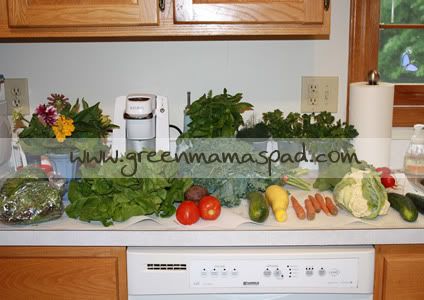
      Last year we had the pleasure of joining a local, certified organic CSA (Community Supported Agriculture). It is by far one of the best "green" thing I have ever done. We were on the waiting list for two years but finally got the call last year and believe me, it was well worth the wait. I was absolutely floored by how much food I would come home with. The picture you see below is just a sampling of the goodies I picked up one weekend. Of course you can read more about how much I love my CSA.

      We split our share with my brother and sister-in-law to help keep the cost affordable for both of our families. Since joining many people have started asking us about what Community Supported Agriculture is. So I put together some basic info on what CSA's are all about.


      What is Community Supported Agriculture / CSA?
      Community Supported Agriculture or CSA is a farming system where the farmers and consumers share both the benefits and risks of food production. The farmer will set up a certain number of "shares" and sell each one to the public. The consumer then gets to pick up their "share" of produce every week during the allotted season. Shares are usually either in the format of a pre-done box of produce or mix and match style where the shareholder can pick and choose, with limits, on what they want that week. If its a great growing season than the consumer benefits from the plentiful harvests. If it is a bad growing season then unfortunately the consumer may not get as much as they had hoped for.

      What are the benefits for the consumer?
      The number one reason, in my opinion, to join a CSA is because you get the freshest and tastiest produce possible. Plus fresh produce has more nutrients. From the moment a tomato is picked at a farm, then shipped to your grocery store and then bought by you, it actually loses some of its nutrients. You can also find a lot of organic CSA'a so in addition to fresh, you are getting pesticide-free fruits and veggies. It is also great to get your kids involved and bring them with you to the farm so they can understand where their food comes from. Last year the very first thing we got to do was pick our own strawberries. I am telling you they were the best tasting strawberries I had ever had in my life. And my son loved being able to help me pick them.


      What are the benefits to the farmer?
      Collecting money for shares in advance, usually a few months before the season begins, gives them the cash flow they need to get the plantings and farming going. If it happens to be a horrible growing season, then it is not a total loss for them financially. It is also a great way for them to build relationships with members of the community and gain life long customers.

      How much does it cost?
      There may be a bit of sticker shock when you first start to look into a CSA in your area. Yes usually hey have a large upfront cost. Obviously this will vary depending on your area and length of the growing season. I would expect that a year-round CSA is more money then a 5 month CSA. For our farm, the cost of a single share is between $560 to $660 depending on which type you choose. The mix and match shares are usually less expensive because you are putting it together yourself and in many instances picking the produce fresh from the fields yourself, so the farm saves on the cost and time of having staff do it for you. I highly recommend this type of share as well because it is so much fun and you really feel connected to the farm and food. Believe me the cost is more than worth it. I walked out with so much stuff some weeks that I felt like I was robbing them!

      How long is the growing season?
      Obviously this will vary depending on your region and climate. Up here in Connecticut where we have long winters, the season is usually June through october. However if you go down South to warmer areas then you can find year-round CSA's. Oh how I envy you in the warmer climates.

      What kind of food will I get?
      Again, this will vary by region and climate. All CSA's are going to have typical produce like tomatoes, lettuce, strawberries, carrots, potatoes, and so on. I even know people who purchase locally raised, grass fed beef through their CSA. Our CSA also has herbs and fresh flowers that you can cut every week. It is such a nice touch being able to put some fresh flowers in my kitchen.

      I have all of this produce, now what do I do?
      Start searching for recipes! This would be a great time to talk with the farm staff and utilize their knowledge. Chances are, they have eaten and cooked almost everything grown on that farm and can help you find a recipe. Many CSA farms also have websites and will list their favorite recipes on it. If all else fails, Google it. You'll find something!

      How can I be more involved?
      If you fall in love with your CSA and want to find a way to be even more involved, ask them about any volunteer opportunities. On our farm, all of the staff are volunteer's and I know they can always use an extra set of hands!

      How do I find a CSA near me?
      The first place I would check is LocalHarvest.org. You can search for a CSA by zip code or city, state and it will give you a listing of the closest ones. If you can't find anything there, you may want to check to see if your state's department of agriculture has any type of listings for farms. For my fellow Connecticut residents, I am compiling a list of all Connecticut CSA's which I hope to have up in the next week or two.

      * * *


      I hope this helped answer some basic questions on CSA's and how they work. Did I forget anything? If you have more questions please ask them and I will do my best to answer them or point you in the right direction! 
      If you already participate in a CSA, I'd love to hear about your experiences!

      Thursday, April 28, 2011

      Are Your Personal Care Products Toxic?

      Have you ever taken a moment to read the ingredient label on your shampoo, lotion or makeup? Most of us haven't. If you pick it up and look at the label now, is the list of ingredients long? Are there words you don't recognize and can't pronounce. Sadly, so many personal care and beauty products out there contain toxic chemicals.


      It has been about 3.5 years since I started my green journey and it all started with EWG's Skin Deep Cosmetic Database. A friend of mine had shared a link to the site and I decided to check it out. This site has a database of over 65,000 products like toothpaste, make-up, shampoo, etc. You can search for your item and it will tell you the toxicity level. Products are rated on a scale of 0 - 10, 0 being not toxic at all and 10 being extremely toxic. It also gives you a beak down of each ingredient and the concerns associated with it.

      So I visited the site and typed in the baby wash that I was using on my then 6 month old twins and 2.5 year old toddler and I was floored. I want to say at that time I was using a Gerber baby wash but honestly I don't remember. Then I stared looking up other things I was using on the kids and myself and at that moment made a decision to change. One by one I started replacing our products with more natural skincare options. I started with the kids and then worked my way to me because really, no one can afford to just go out and buy all new personal care products in one shot.


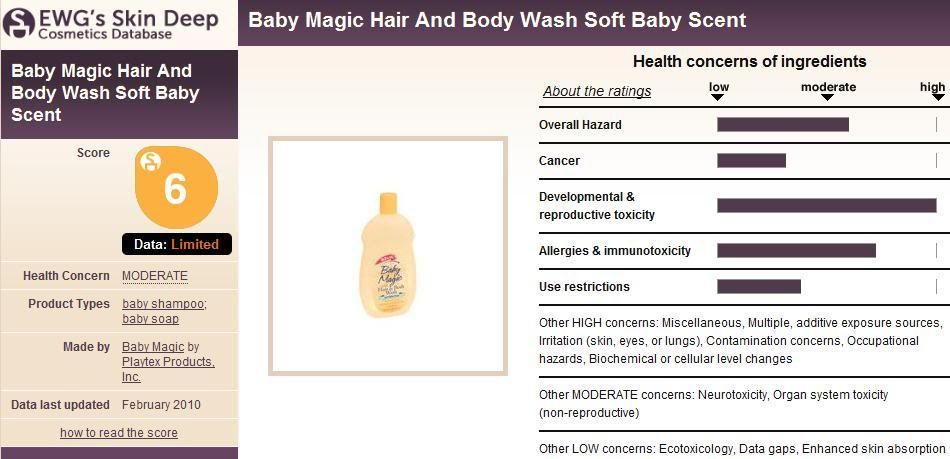
      For an example to show you I looked up two different baby washes. The first is Baby Magic and I selected this because the hospital where all my kids were born gave me free samples and I have used it in the past. Below that you will see Burt's Bees which I am currently using for my little guys.


      So for starters the Baby Magic rates a 6 out of 10 which I do not like at all. If you click on the image you can read some of the details and you will see that there are moderate cancer concerns with this product as well as high developmental and reproductive concerns. In contrast the Burt's Bees rates a 1 which I am much more comfortable with. I was not able to fit it all in the screen shot but on the actual site if you scroll down it also breaks down the ingredients for you and rates those individually as well.

      At this point you might be thinking, "So what if it is a 6? That is still better than a 10." This is true of course, there could be worse options out there. However if you think of everything you might use on your child like body wash, lotion, baby wipes, sunscreen, toothpaste and if all of those are a 6, well then all those toxins add up. I try my best to keep things on the low end of the scale but I am far from perfect. I am still struggling to find a natural, kid friendly sunscreen that I like so my current one is a 6.

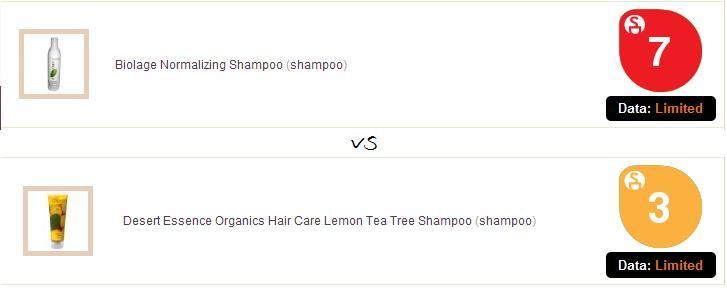
      Here is also a quick peak at the shampoo I used a few years ago (Biolage) versus the shampoo I am using now (Desert Essence). This is what the search results look like and you would click for more details. Obviously a 3 is not perfect, but its a huge improvement from a 7.


      So my very long winded point is take the time to know what you are putting on your body and your family's body. Think about how much "stuff" we put on ourselves every day and if each of those contain toxins, it will keep adding up and the end result cannot be anything good. The Skin Deep Cosmetics Database is a great resource to use in order to get started. I am in no way telling you to throw out everything you own and by new, that is not practical nor affordable at all. With the exception of lipstick, which I wear maybe once a month, I have changed out all of my make-up, beauty products and personal care products for less toxic natural ones. But it literally took me years to do it. My suggestion would be to look everything up and start replacing the most toxic ones first. Is it completely overwhelming? Absolutely. But it can be done and even changing out just one of your products is a step in the right direction.

      Now I challenge you to go look up at least one of the products that you use regularly and comment on how it scores. Maybe either myself or another reader can suggest a safe alternative for you. :)

      Thursday, March 31, 2011

      Cheesy Bean Quesadillas: Easy Organic Living Challenge #2: Invent a Snack

      If your kids are picky eaters like mine, it can be a challenge to find snacks that they like and that are healthy. My fail safe snack is fresh fruit - all of my boys love it. The older 3 that are in school half days get a fruit salad sent in for snack time every day. But obviously they can't eat fruit all day long so I had to come up with some other ideas.

      This week over at the Easy Organic Living community we are moving on to our second challenge: invent a healthy snack. So I have decided to share a snack that I have been using for a few years now. Three of my four boys love it so its a win in my book.

      Cheesy Bean Quesadillas


      Ingredients
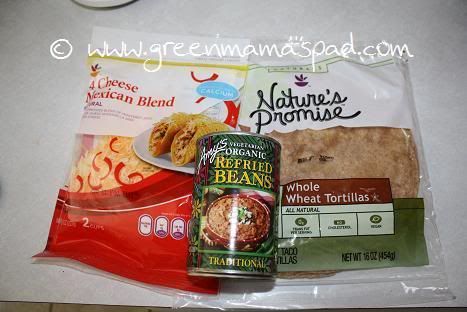
      Whole wheat tortillas
      Refried Beans
      Shredded Mexican cheese blend


      Please note that I used a quesadilla maker for this but you could also do this in a skillet on your stove.

      1. Place one tortilla on the machine. Spoon on a thin layer of refried beans, of with a generous amount of shredded cheese then place a second tortilla on top.


      2. Close the lid and let it cook for 2-3 minutes. Usually when I hear it start to sizzle that means the cheese has fully melted and is reaching the edge, so I take it out. You want it to be a little crispy but not burnt. :)

      3. Transfer to a plate and use a pizza cuter to slice into 6 triangles. Let cool for a few minutes, the inside is VERY hot.


      EXTRAS
      Serve with several dipping cups filled with salsa, sour cream and guacamole. If you think you can get away with it, you might want to try hiding some veggies in between the beans and cheese, like Kale flakes.

      I am participating in the Easy Organic Living Blogger Challenge however I was not compensated for this post. I will be receiving a goody bag for my participation. The challenge is co-hosted by BabyCenter.com and Healthy Child Healthy World and sponsored by Stonyfield Yogurt.

      Monday, March 21, 2011

      Easy Organic Living Challenge #1: Shift & Save!

      Organic living does no have to be scary or difficult. BabyCenter.com and Healthy Child Healthy World have teamed up to create the Easy Organic Living community. Sponsored by Stonyfield Yogurt, Easy Organic Living was launched to educate moms on the importance of organic living and provide them with steps to do so easily.


      To kick things off, they are hosting a series of 4 organic challenges. The first is the Save a Dollar Here, Shift a Dollar There challenge where for one week you are tasked to use some money saving techniques and then shift those savings to purchase organic products. Here are some of their great tips on saving money on groceries:

      - Buy in bulk and save up to $500 a year! Head to Costco, BJ's or Sam's Club to buy some things in bulk (I love Cosco's organic peanut butter). If your grocery store has a bulk aisle, take advantage of it!

      Eat all your leftovers. Here is a scary statistic: 14 percent of all the food that we buy ends up in the trash, equaling up to almost $600 thrown away each year, according to the USDA.

      - Drink more water. Instead of buying soda or juice, drink free tap water and save. And please, STOP BUYING BOTTLED WATER. Bottled water costs more than gasoline and creates a tremendous amount of waste. Invest in one reusable water bottle for each member of your family and both your wallet and your planet will thank you.

      - Purchase whole chicken. When you buy boneless skinless chicken breast, you are paying for the meat and for the time it took the butcher to cut it and clean it. A whole chicken is cheaper per pound and then you will have leftovers to make chicken sandwiches or maybe even chicken soup.

      - Buy fruits and vegetables when they’re in season. Out of season produce will cost you more and has a bigger carbon footprint because it has been shipped in from another part of the US or even another country.

      - Eat less meat. Try and replace one meat meal per week with a vegetarian one


      So what do you say, are you ready to try this challenge with me? Let's do it!

      Now to be honest, I do a lot of these already. But there is always room for improvement so I took a harder look at these to see what I cold try a little harder at. Here are some changes that I have personally been making over the past 2 weeks.

      - I love to drink a big glass of apple cider every morning with my breakfast. However since I am the only one that drinks it, it really is not a necessity. Now don't get me wrong, I miss my morning cider. Somehow breakfast feels incomplete without it, but I am surviving. And at $5.00 per gallon that means right there that is $5.00 per week that I am saving.

      - With Lent upon us that easily gave me my one meal per week with no meat. We are not big red meat eaters but we certainly eat a lot of chicken. These past 2 Fridays we have made sure not to eat any meat. The first week we did a breakfast for dinner with lots of whole wheat pancakes. The second week was a ravioli dinner. I can't calculate exactly what the savings are on this, but those are two pretty inexpensive meals.

      - Shop your grocery store's sale circular. I'm not so good with menu planning, but I do try. One thing I always do is check out Stop & Shop's weekly circular and base some of my meals off of what is on sale. If I also see something that we use a lot of that is on sale, I will stock up. For instance whenever they have their Nature's Promise breads on sale, I usually buy at least 8 and then send my hubby back in another day for more. My 4 boys already have big appetites and I go through one loaf of bread per day. So when the bread is on sale for $2.50 instead of $3.39, I go crazy. (By the way, that's 89 cents savings per loaf). Luckily we have a big freezer.

      OK so now you are saving money, but what should you buy organic? I make sure that the things we consume the most are organic like milk, yogurt, bread and peanut butter. Next you will want to focus on your fruits and veggies. Check out EWG's Dirty Dozen list to see which produce you should really try to buy organic.

      I am participating in the Easy Organic Living Blogger Challenge however I was not compensated for this post. I will be receiving a goody bag for my participation.


      Monday, March 7, 2011

      Free iPhone Apps to Help You Go Green

      This past Christmas I got an awesome gift from my husband - an iPhone 4! I spent much of 2010 counting down the days till my upgrade, which happened to be the week before Christmas. The minute I got it I started searching for apps. The first one that I downloaded was the Farmville app - yes I am a Farmville addict. Once I had that up and running I began looking for useful, free apps. I was happy to see that there were some apps out there to help me be a little more green. Here are a few that I have been using for the past few months and that I really like.

      Fooducate
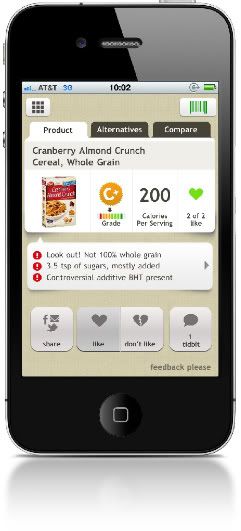
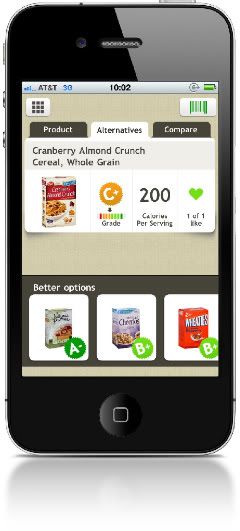
      Now I am pretty good when it comes to reading labels. Between dairy allergies and wanting my family to eat healthier I have had many years of practice. I wanted to see if there was an app to supplement that, one where I could scan in a barcode and it would give me information on the product. After I downloaded Fooducate I fell in love with it. You use the camera to scan in the barcode and then up pops an informational page about the product along with a rating like A-, B, etc. It will tell you things like if there is a questionable ingredient in there or too much sugar. The really great part is that it lists healthier alternatives for you.

      The first day I had this app I literally scanned everything in my pantry and fridge, just for the fun of it. You can also find me standing in a grocery aisle scanning products. I am sure people think I am nuts. They have over 200,000 products in their database and growing. You will occasionally scan something they don't have, but then it asks you if you want to help them out by sending pictures of the ingredients and barcode so they can add it. So I have sent a few new products their way.If you are looking to make better food choices for you and your family, you absolutely need to give Fooducate a try.

      Editor's Note: After several of you asked about an Android version, I asked Fooducate if there are plans in the works. They are currently working on an Android app and is should hopefully be out soon. You can visit the Fooducate Blog for more details.


      Dirty Dozen by The Environmental Working Group
      This is a very simple, easy-to-use app. No bells and whistles, just the information. This app will provide you with 2 important lists for when you are produce shopping: The Dirty Dozen and the Clean 15. The Dirty Dozen is a list of the top 12 produce items that retain the highest amounts of pesticides. These are the items you really want to buy organic. The Clean 15 is a list of the 15 produce items that contain the least amount of pesticides and are okay for you to buy conventional instead of organic. Good for when you are at the grocery store or farmer's market and need to check which produce you should be buying organic.

      Sunscreen Buyer's Guide by The Environmental Working Group
      With Spring and warmer weather hopefully on its way, this is an app you'll want to download soon.What you put on your body is just as important as what you put in your body. While it is crucial to protect yourself and your family from the sun, you should also be aware of all of the chemicals used in many sunscreens and choose one that is better for you. This app gives you a list of the top natural sunscreens and also has a look up feature so you can see where your current one stands. The ratings go from 0 to 10. 0 being the best and 10 the worst. Remember that just because they use the word "natural" on the packaging doesn't mean it is actually safer. I was surprised to find out that my natural sunscreen was rated a 7 ouch. I guess it is time to find a new one, and there is a long list in this app of sunscreens rated in the 0 - 2 range.

      TreeHugger
      TreeHugger is your source for all green news. If you are already a fan of TreeHugger.com then you will definitely enjoy this app as it puts TreeHugger right at your fingertips. Tons of green news, podcasts, their Twitter feed, and more. It even has a recycling section provided by Recycling.com that lets you search where specific materials may be recycled in your area. For example you can select an item like batteries and then it will put pins on map of the closest places to your current location.

      I am constantly on the hunt for green apps and I will bring you more as I find them. I recently downloaded a few more. So I will play with them and test them for several weeks and if I like them, I'll put out a second list of free green iPhone apps. Have you downloaded any green apps that you really like? If you have, please share them with me!


      Thursday, January 28, 2010

      Natural Remedy for a Stye

      On Tuesday night, I noticed that the area under my left eye was starting to get sore. Then Wednesday morning, I woke up to this:


      The picture actually doesn't do it justice. You can see where it is inflamed there but its bigger in person and red. And boy does it HURT. I can only guess that it is a stye, something I have not had in ages. A friend of mine from The Mamasphere, who also happens to be an eye doctor, suggested this home remedy to me. So I wanted to pass it along.

      Styes are best with warm compresses. Take an egg, hard boil it and while it is still hot (but not too hot, don't burn yourself) lay it on your eye. Do not peal. The size of the egg sits in your eye socket very well and the weight of the egg keeps good constant contact with the eye. The sulpher in the egg shell is homeopathic. You can use the same egg over again, just put pin holes in it and microwave for 10 secs at a time until warm. 

      So I am off to boil an egg now and give this a go.  I'll have to report back on if it works or not.


      Tuesday, September 29, 2009

      Going Green: Ditch the Bottled Water

      I never quite understood why we pay for something we can get for little to no money right from your kitchen tap. It just seems like a complete waste of money to me. According to Ideal Bite, the average cost of tap water is $0.0015 per gallon. In contrast, a 16-oz bottle of water can cost up to $2.00 at the convenience store. Are we really paying more for water than we are gasoline? (Gasoline is $2.67/gallon here). Doesn't this seem ridiculous to anyone else?

      Let's forget the whole money aspect for a few minutes, maybe you have the extra money to spend on water. But what about the environmental impact of all those water bottles? Take a look at this:

      ~ Americans consume more than 2.5 million bottles of water every hour, and only around 15% are recycled. YIKES!

      ~ Bottled water produces up to 1.5 million tons of plastic waste per year. Again, only a small percentage are actually recycled.

      ~ 1.5 million barrels of oil are used every year to manufacture disposable plastic water bottles for the U.S. market. That is enough energy to power 250,000 homes or fuel 100,000 cars for a year.

      So between the high cost and the environmental impact, doesn't that make you want to at least cut back on your bottled water consumption? If you said yes, then here are some easy things you can do. Get yourself a good reuabale water bottle. I prefer stainless steel ones but if you opt for plastic, at least make sure it is BPA-free and Phthalate free. Once you have your bottle, fill it up at home before you leave the house. It is as simple as that.

      Wait, you don't like the taste of tap water? I don't either. We have well water which is OK but I hate the taste of municipal water - it tastes like chlorine. Or maybe you are concerned about what is in the tap water? No problem! We are fortunate that our refrigerator has a PUR water filter that filters the water for both our water and ice. So I just fill up my bottles from the fridge. If you don't have that, there are other filtration items you can buy. Both PUR and Brita make water pitchers with filters that you can keep in your fridge as well as filters you can attach to your kitchen faucet. We used to have both of these before we bought our refrigerator a few years ago. They worked great and the faucet one was really nice because I could also filter water I cooked with. (I miss that). There are even water bottles out there with filters on them.

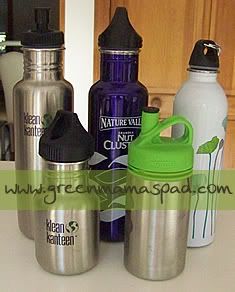
      I've accumulated a small collection of stainless steel bottles over the last 2 years, as you can see in the above picture. I love them all. There are so many out there to choose from. You can check out my EarthLust review that I did earlier this year. For a wide selection of bottles, you can visit reusablebags.com which is where I bought our Klean Kanteen bottles.

      And if you are up for it, sign the Take Back The Tap Pledge and commit yourself to reducing your bottled water usage!

      Related Posts Plugin for WordPress, Blogger...